




Table of Content
Can You Bring Scissors on a Plane? 2026 Carry-On and Checked Luggage Rules

Yes, you can bring scissors on a plane in the United States when the blades measure less than 4 inches from the pivot point. The important measurement starts at the screw where the blades cross. It does not start at the handle. Small craft, nail, and sewing scissors may go through a TSA checkpoint if they meet that limit. Longer scissors belong in checked baggage and must be covered so they cannot injure an inspector or baggage handler.
Can You Bring Scissors on a Plane in Carry-On, Checked, and International Luggage?
Scissors may be permitted in one bag and restricted in another. The result can also change when a different country screens the passenger. A label such as travel scissors does not determine whether the item can fly.
TSA Rules for Scissors in Carry-On Luggage
The TSA list for scissors requires blades in carry-on luggage to measure less than 4 inches from the pivot point. A blade measuring exactly 4 inches does not meet the word “less.”
Close the scissors and locate the screw or rivet where the blades cross. Place the zero mark of a ruler at the center of that pivot, then measure one blade to its tip. Do not begin at the handle.
Four inches equals 10.16 centimeters. Leave a small margin below the limit because TSA may reject an otherwise permitted item when it raises another security concern.
|
Scissor type |
U.S. carry-on test |
|
Nail or cuticle scissors |
Allowed when the blade is under 4 inches |
|
Embroidery or sewing scissors |
Measure from the pivot to the tip |
|
School safety scissors |
The same size rule applies |
|
Hair shears |
Allowed only when the blade is under 4 inches |
|
Kitchen or fabric shears |
Usually too long, so measure first |
Nail and embroidery scissors often qualify because their blades are short. Hair and trauma shears still need to be measured. TSA also prohibits a multi-tool with a knife blade, even when its scissors are short. Folding scissors do not receive a separate exception. Measure the exposed blade after opening the tool.
TSA Rules for Scissors in Checked Luggage
TSA permits ordinary scissors in checked baggage without the 4-inch cabin limit. This includes long fabric shears and kitchen scissors that would not qualify for a carry-on.
The permission comes with a safety condition. TSA says sharp objects in checked bags should be sheathed or securely wrapped to prevent injuries to baggage handlers and inspectors. Checked baggage can be opened for inspection. Check local possession laws when the design has another function.
This rule covers ordinary manual scissors. Electric cutting tools can introduce separate battery or motor restrictions, so check the exact device with the airline before packing.
International Flight Rules for Scissors in Luggage
A pair accepted at a U.S. airport can fail the rule on the return flight or during a connection that requires another security check. The table below lists some limitations in different countries.
|
Departure authority |
Cabin rule for scissors |
Official source |
|
United States TSA |
Blade must be less than 4 inches from the pivot |
|
|
United Kingdom |
Blades no longer than 6 centimeters are allowed |
|
|
European Union |
Scissors with blades over 6 centimeters from the fulcrum are prohibited |
|
|
Canada |
Blades of 6 centimeters or less from the joint are allowed |
|
|
Australia |
Pointed metal scissors are prohibited. Blunt or round tips under 6 centimeters are allowed |
Note: Six centimeters is about 2.4 inches. Australia also considers the tip and material, so blade length is not a universal test.
Review the official rule for every airport where screening occurs. Include the return airport and any connection where you must enter the secure area again. Airlines may add conditions, but they do not replace the local security authority. If two rules appear to conflict, follow the stricter standard or place the scissors in checked baggage.

What Are the Packing Requirements for Scissors on a Plane?
Permission to fly with scissors does not remove the need for careful packing. A secure setup protects people who inspect or handle the bag. Clear organization can also make a manual check easier. The right method depends on where the scissors will travel.
Cover the Blades Before Packing Scissors in Luggage
Use the fitted sheath when one is available. Otherwise, close the blades and secure stiff cardboard around them so the cover cannot slide off. A rigid guard is preferable for costly hair or fabric shears.
Put the covered scissors inside a zipped pouch. Label the pouch so another person may unpack the case, and do not block an authorized security inspection.
Test the cover before closing the bag. The tips should not pierce it when light pressure is applied. Avoid taping directly to a finished blade because adhesive residue can damage the cutting surface and make the tool harder to clean.
Keep Permitted Scissors Accessible in Carry-On Luggage
Place the covered pouch where an officer can reach it easily. Keep scissors away from cables and electronics, so their outline is easier to identify during inspection.
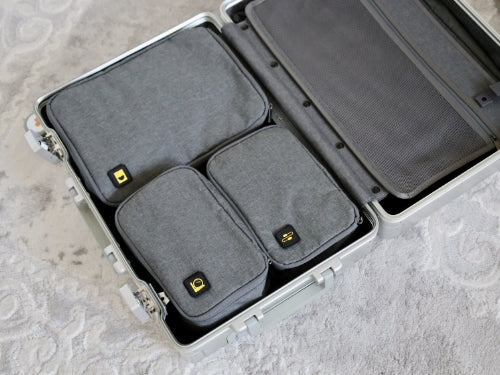
The Road Runner Carry-On 20-inch suitcase separates devices with sleeves for a 17-inch laptop and a 10.9-inch tablet. Those dedicated spaces allow a sheathed pair of permitted scissors to stay in the main compartment instead of rubbing against a screen.
Stop Wrapped Scissors From Moving in Checked Luggage
Place the zipped tool pouch near the center of the suitcase between soft clothing. Secure the packed layer so the pouch cannot move toward the case opening during handling.
The Hegent Check-In Luggage 28-inch case supports this setup with Y-strap compression and a removable compartment. The case weighs 16.3 pounds when empty. Its 99-liter interior lets the protected pouch lie flat.
How Should You Choose Luggage for Scissors on a Plane?
The correct bag depends first on whether the scissors qualify for the cabin. Storage design can make inspection and packing easier, but it cannot change a security rule. Trip length and airline baggage limits also affect the choice.
Choose Carry-On Luggage Only for a Clearly Permitted Pair
Travelers who need small craft scissors during the trip may prefer carry on luggage with divided storage. Keep the sheathed tool apart from a laptop and place it where an officer can inspect it without emptying the case.
Airline cabin limits include wheels and handles. A compliant tool can still sit in a bag that must be checked at the gate.
Choose Checked Luggage for Long or Expensive Scissors
Use checked luggage for kitchen shears, full-size fabric scissors, or a pair near the U.S. limit on an international route. Cover the blades before packing and confirm the destination rules for possession outside the airport.
Match Luggage Sets to Mixed Packing Needs
Travelers who switch between short domestic trips and longer international flights may find luggage sets useful. The cabin case can hold permitted daily items, while the larger case provides a safer place for long shears after proper wrapping.
FAQs
What Happens When TSA Finds Scissors in Your Luggage?
It may be inspected. An officer can identify the scissors and measure the blade. If they fail, return them to a vehicle, move them to checked baggage, or surrender them.
Can You Use Scissors on a Plane After Security?
Ask the cabin crew first. Checkpoint approval covers screening, while the crew controls safety inside the aircraft. Keep scissors stored during boarding or turbulence and replace the sheath immediately after use.
Do First Aid Kit Scissors Get a Special Exception?
No. Their blade must meet the same carry-on limit. Pack longer medical shears in checked baggage unless an official accommodation applies to your specific medical need.
Can a Circular Thread Cutter Go in Carry-On Luggage?
Usually no. TSA states that circular thread cutters containing blades belong in checked baggage. A permitted pair of short scissors may be the clearer choice for sewing.
Does TSA PreCheck Change the Rule for Scissors?
No. PreCheck changes parts of the screening process, not the item limit. Measure from the pivot and keep the blade under 4 inches.
Can You Bring Several Pairs of Scissors on a Plane?
Yes, if each pair meets the applicable rule. Multiple sharp tools may invite closer inspection, so cover every pair and consider checking the group.
Final Answer
The answer depends on the blade measurement and the airport where screening occurs. U.S. carry-on rules allow blades shorter than 4 inches from the pivot, while longer scissors belong in checked baggage. International limits can be shorter and may consider the tip design. Check each departure authority, cover sharp edges securely, and treat the screening officer’s decision as final.
Leave a comment