



Table of Content
How to Pack Shoes in Suitcase Without Wasting Space

Pack clean, dry shoes near the wheel end of your suitcase, with each shoe covered and the space inside filled with soft items. This method helps first-time flyers and regular travelers protect their clothes while using the hard-to-fill edges of a case. It also supports the shape of each shoe. Wear your largest pair during transit when that is comfortable. Pack only shoes that match a real activity.
How to Pack Shoes in a Suitcase Step by Step
Packing shoes becomes easier when decisions happen in a fixed order. A planned sequence reduces late changes and makes the suitcase easier to close. It gives each item a clear place before space becomes limited.
Step 1: Choose Shoes Before You Open Your Luggage
Start with your plans. A walking shoe can cover most daytime use, while one compact pair can cover dinner or a specific event. Shoes that serve only a possible outfit usually take more space than their value justifies.
Try every pair with the clothes you plan to bring. If two pairs do the same job, keep the one that is lighter or easier to clean.
Step 2: Clean and Dry Every Shoe Fully
Brush loose soil from the tread, then wipe the sole with a slightly damp cloth. Let the shoe dry in open air before it enters a bag. Remove wet insoles and dry them separately. Trapped moisture can create odor and may mark leather or fabric.
Step 3: Fill Shoes Without Stretching Them
Use clean socks inside sneakers or sturdy boots. Push them gently into the toe box until the upper holds its normal shape. A wrapped belt can fit inside a wide boot. Keep chargers and toiletries out of shoes. Hard edges can mark the lining, while leaks are difficult to remove.
Step 4: Place Shoes at the Wheel End of Your Luggage
Set covered shoes heel to toe along the lower edge of an upright suitcase. The rigid shapes sit in the area where wheel housings often interrupt a flat packing surface. Add rolled clothing around them so they cannot shift.
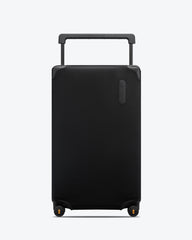
A deep top-opening case can make this layout easier because it gives footwear one continuous base. The Adventure Carry On 20-inch has a wide handle layout, a 45-liter listed capacity, and expansion to 50 liters, which can meet your demands for almost every trip.
Step 5: Cover Soles Before Clothes Go Into the Suitcase
A washable shoe bag gives each pair a reusable barrier. A shower cap can cover only the sole when space is tight. Keep the opening away from light clothing so exposed tread does not rub against fabric.
Separate muddy shoes from clean dress shoes. Plastic works for a damp trip home, but remove it after arrival. Sealed storage holds moisture close to footwear.
Step 6: Build the Clothing Layer Around the Shoes
Place durable rolled clothes beside packed sneakers. Fold structured clothing above that layer and keep fragile footwear closer to the top. This order protects softer items without forcing the lid closed.
How to Pack Different Shoes in Luggage
The packing method should reflect how easily a pair bends or gets marked. Some shoes tolerate firm support, while others need extra room. Give the least flexible pair priority when space becomes tight.
|
Shoe type |
Best cover |
Best suitcase position |
|
Walking sneakers |
Washable shoe bag |
Wheel end or side wall |
|
Leather dress shoes |
Separate soft bags |
Upper layer |
|
Heels |
Soft bag around each shoe |
Top beside folded clothes |
|
Tall boots |
Large shoe bag |
Long edge near wheels |
|
Sandals |
Sole cover |
Flat edge or lid pocket |
Pack Sneakers Along the Luggage Edge
Sneakers usually tolerate the lower part of a case if their toe boxes are filled. Place each shoe in its own cover when the pair will fit better apart. Turn the soles toward the shell and use a shirt roll to stop movement.
Do not force a curved athletic shoe flat. Compression can bend its heel counter. Wear the larger pair when two athletic options are necessary.
Protect Dress Shoes and Heels in Luggage
Fill dress shoes with clean paper or socks that will not transfer color. Put each shoe in a soft bag so polished surfaces cannot rub together. A lightweight shoe tree can help, though it adds weight.
Heels belong above dense clothing. Support each heel with soft fabric and cover metal details. Keep the suitcase lid away from narrow heels.
Give Boots a Stable Base in Checked Luggage
Boots use enough room to shape the whole packing plan. Fill the shafts lightly, align them along the long edge, and keep the soles toward the outer wall. Wear them in transit if they are comfortable for airport walking.
When boots must be checked, a broad uninterrupted base leaves fewer awkward gaps. The Voyageur Check In 28-inch lists 99 liters of capacity within 29.1 by 16.6 by 13.3 inches. Its wide handle creates a flatter interior, while the compression system helps keep the surrounding load in place.

How Many Shoes Should Go in a Carry On Bag
Footwear can use a large share of a small cabin case. Decide its space allowance while the suitcase is still empty. The right quantity depends on how many different settings the trip includes. Every packed pair should earn its place through planned use.
Plan One Worn Pair and One Packed Pair
One pair on your feet and one useful pair in the case is a strong starting point for a short trip. Add footwear only when a planned activity has a clear need. A formal event or a trail may justify the space.
Put the packed pair into your carry on bag before clothing. You will see the true space left and can remove an extra outfit before the case becomes overfilled.
Match Footwear to Each Trip
A longer trip does not always need more shoes if laundry and repeat outfits are available. Climate and activities matter more. A city visit may work with one walking pair, while a work event can require a second style.
Families or travelers switching between cabin and checked cases may benefit from coordinated luggage sets. Keep each traveler's essential pair in the bag that will stay with that person. This prevents one delayed checked case from taking every useful shoe.
How to Keep Shoes and Luggage Clean During the Trip
A suitcase may be opened and closed many times during one trip. Conditions also change between the outbound and return journeys. A consistent routine makes each repacking more predictable. It reduces the work needed after arriving home.
Repack Worn Shoes Only After Basic Care
Knock off dry soil outdoors and wipe the soles before checkout. Let sweat dry while you finish packing other items. A few minutes in moving air helps more than sealing a warm shoe immediately.
Keep the original shoe covers in one easy pocket. Turn reusable bags inside out for cleaning after the trip. Replace a torn disposable cover before dirt reaches the suitcase lining.
Separate Damp Shoes From Clean Luggage
Rain-soaked shoes need a temporary waterproof layer for the trip home. Remove loose insoles first and wrap each shoe separately. Unpack them as soon as you arrive.
Do not use hotel towels as permanent packing material because damp fabric adds moisture. Paper can support a wet shoe during drying, but change it when saturated. Keep delicate leather away from direct heat.
Check the Packed Case Before Closing It
Stand the suitcase upright and roll it a short distance. If it tips or pulls to one side, move dense footwear closer to the wheels and center. The case should close with normal zipper pressure.
Use the compression panel to hold clothes in place. Avoid tightening it until the shoes are crushed. Compare other luggage by full dimensions and interior layout when your usual footwear never fits the case you own.
FAQs
Should shoes go on top or bottom of luggage?
The sturdiest shoes should sit near the wheel end. Put heels and delicate dress shoes higher in the case, where heavy clothing cannot press on them.
Should I put shoes in a plastic bag?
Yes, for short-term isolation. A washable shoe bag is better for routine use. If shoes are damp, unpack them quickly because sealed plastic holds moisture.
How Do You Pack Shoes in a Travel Backpack?
Keep them near the middle and close to the back panel. Balance both sides so one shoulder does not carry more weight. Protect any laptop compartment from hard soles.
Should You Pack Brand New Shoes for a Trip?
Avoid it when possible. Wear new shoes at home before departure so you can find pressure points early. Bring footwear that already feels comfortable during longer walks.
Should Shoes Stay in Their Original Box?
Usually no. A box uses valuable suitcase space. Keep it only when fragile or valuable footwear needs rigid protection and the added size fits your baggage plan.
Conclusion
Fill the toe box gently with clean socks or colorfast paper. Do not overfill it. Keep rigid pressure away from the heel structure and delicate upper.
Packing shoes well depends on four decisions. Bring pairs tied to real plans, clean them, use their space, and place them where the suitcase can support them. Measure the finished bag, then remove any pair that creates strain or exceeds the airline limit.

Leave a comment